

Prepare for a journey through time, where every stone breathes history and the air is woven with medieval mysteries. We will travel to Chartres, a city whose main jewel – the Notre-Dame Cathedral – holds so many secrets that they would suffice for a dozen novels. Few people know that Chartres Cathedral is not just a Gothic masterpiece; it's a true book of stone and light, written over centuries, and we will learn to read it.
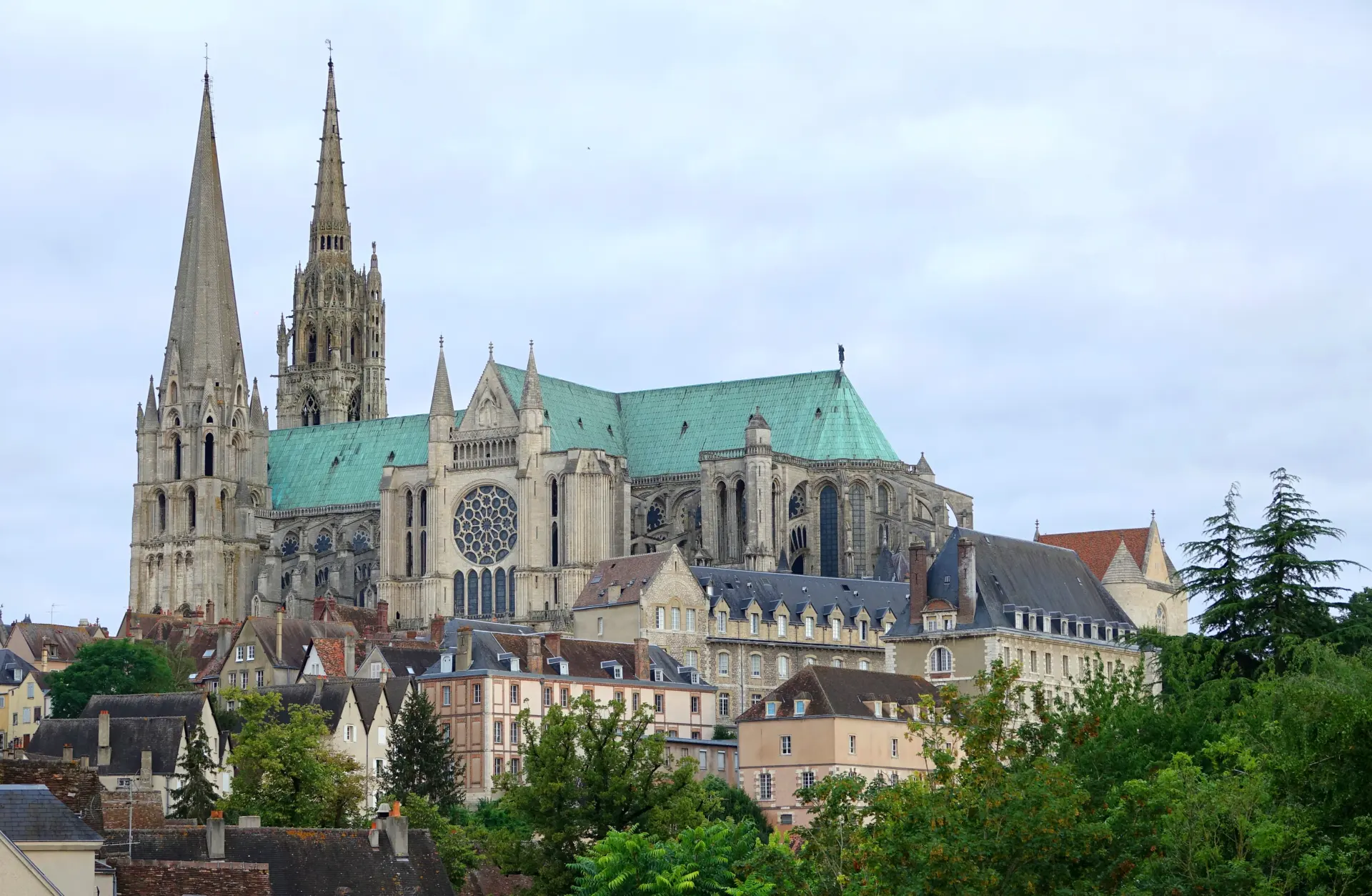
The road from Paris to Chartres is already part of the adventure. When the majestic silhouette of the cathedral first appears on the horizon, you will feel the atmosphere change, as if you are crossing an invisible boundary between the hustle of modernity and the serene grandeur of the past. We won't just see the cathedral; we will immerse ourselves in its aura, feeling the power and fragility of the time it has endured.
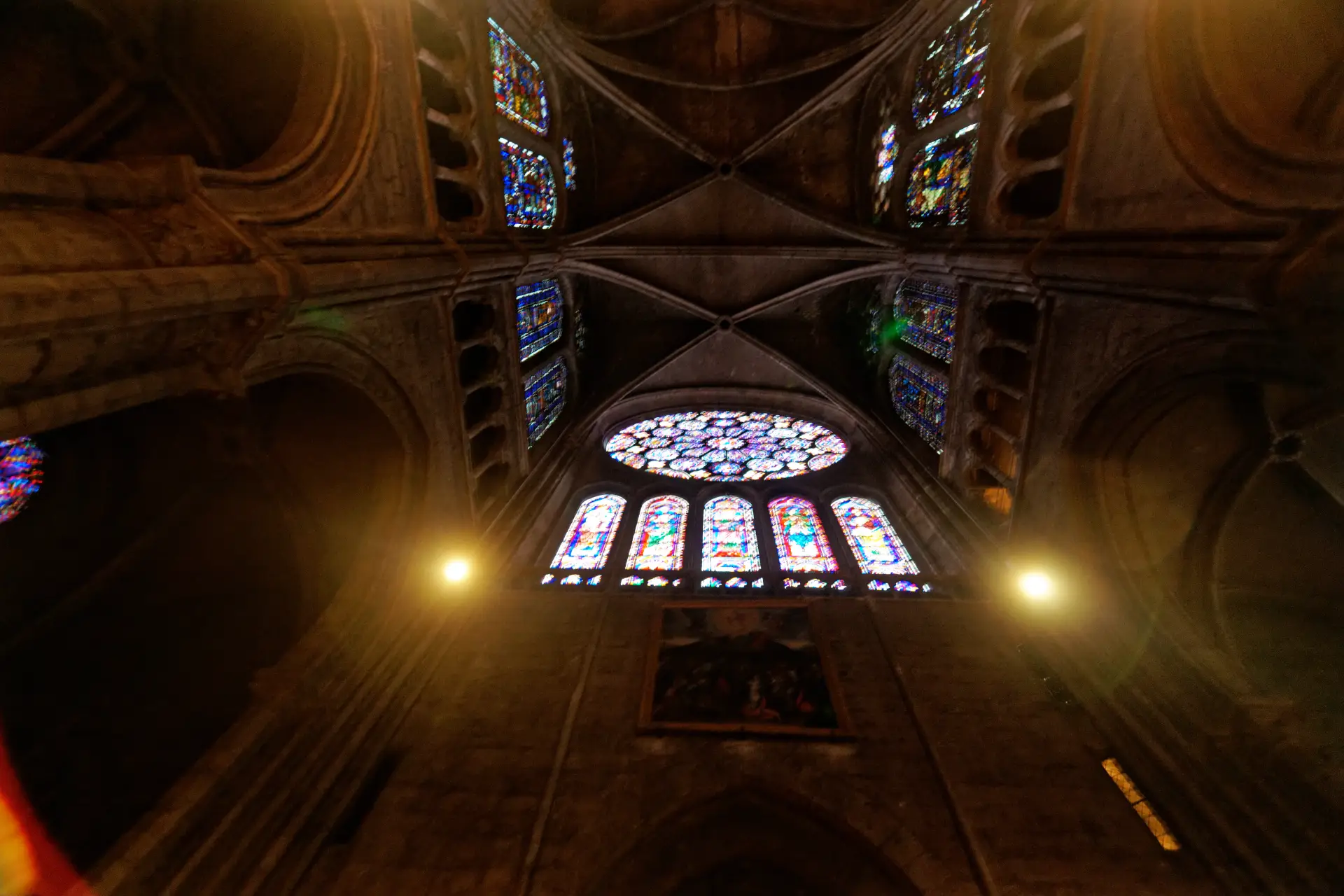
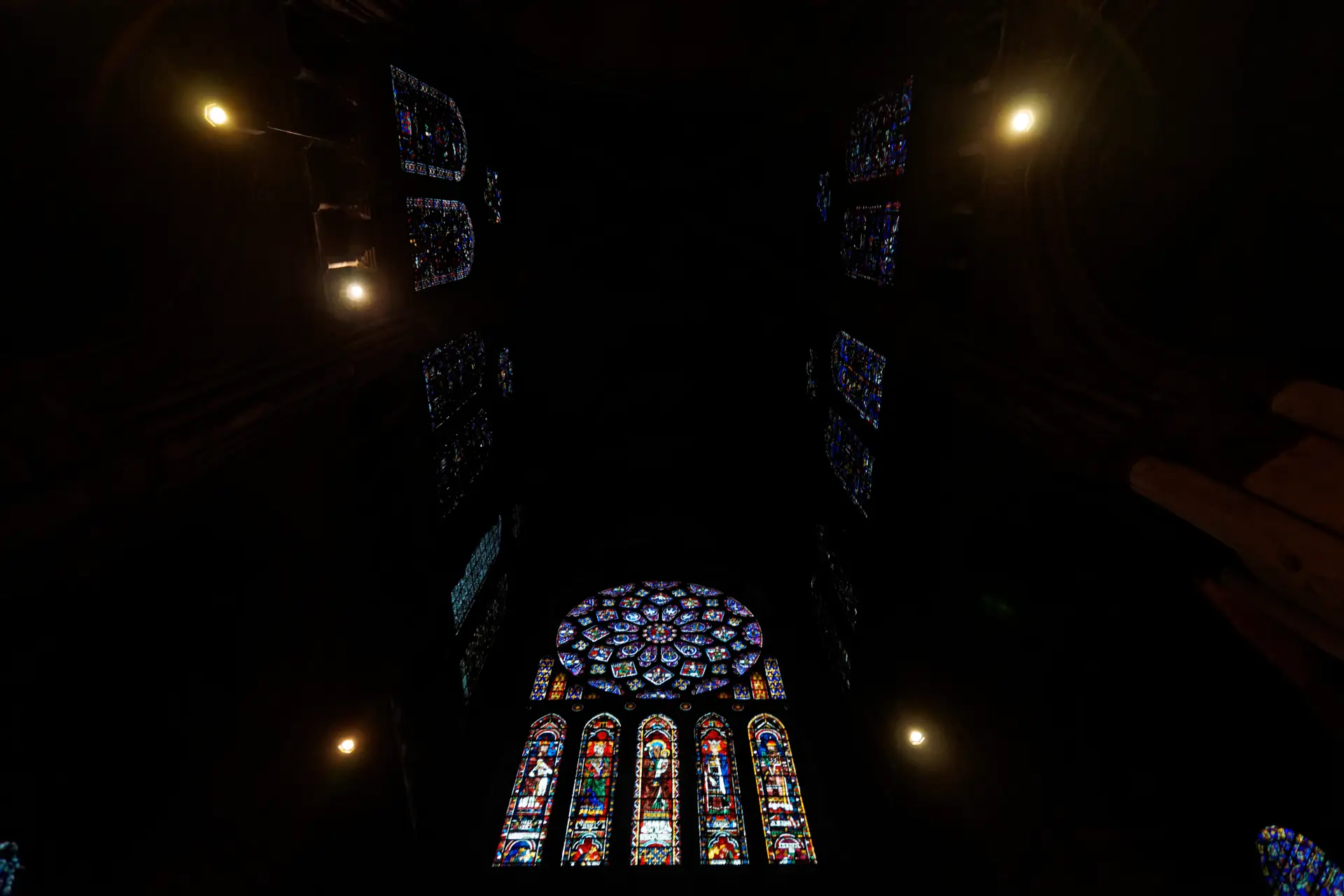
Upon entering, you will immediately notice it – the unique, deep Chartres Blue. This is not just a color; it's a legend. You will discover why medieval masters were able to create such a shade of stained glass, a secret that remains unsolved to this day, and how this blue light affects everyone who finds themselves beneath its canopy. It is said to possess a mystical power, calming the soul and opening eyes to something greater.
And what about the famous labyrinth laid out on the floor? Ask yourself, why is this complex pattern, once walked by pilgrims, located right in the center of the temple? It's not just decoration. We will uncover its symbolic meaning, discuss how it relates to spiritual quests, and why it served as a kind of "path to Jerusalem" for those who could not embark on a distant pilgrimage. And we will also descend into the ancient crypt, where even older secrets are hidden.
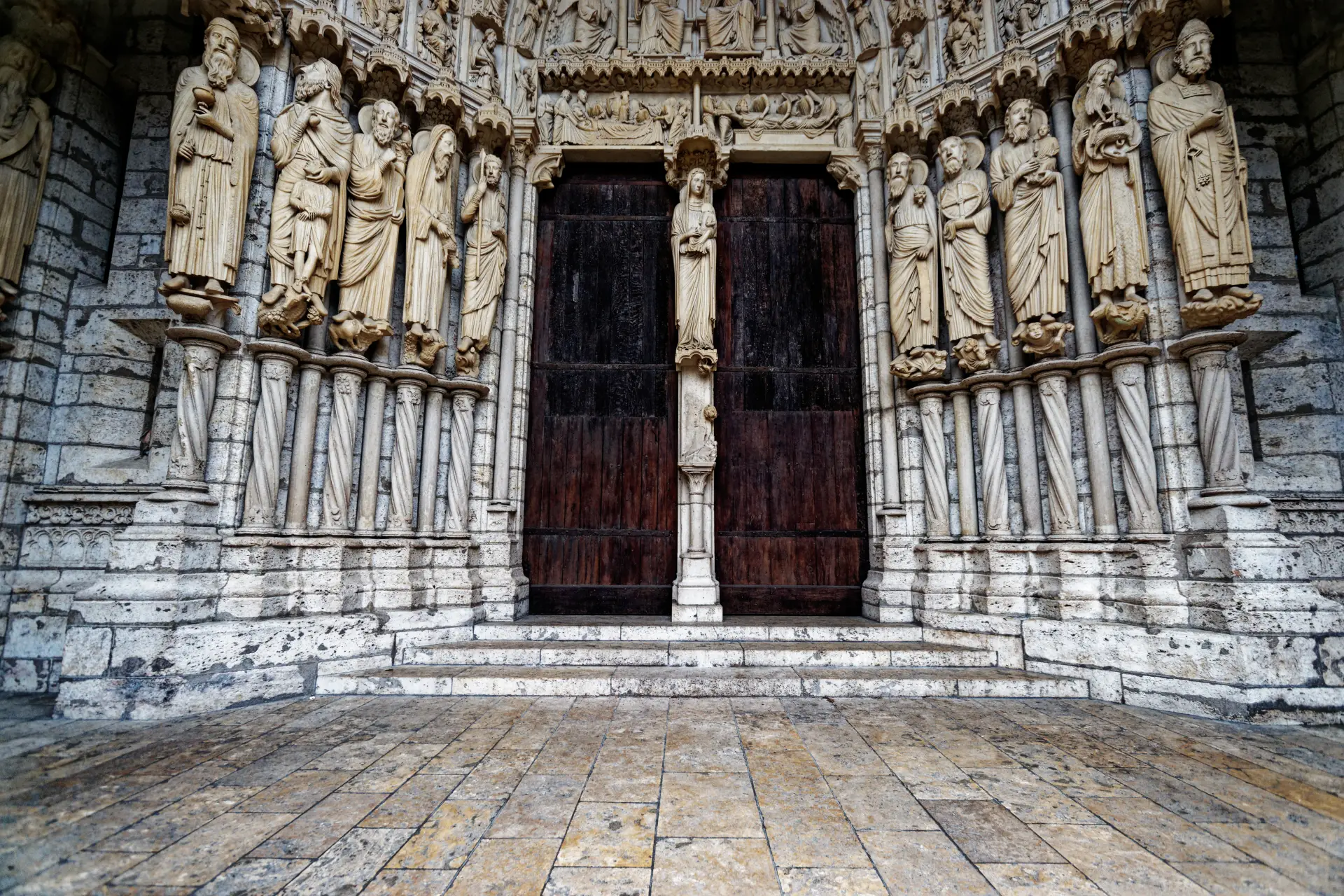
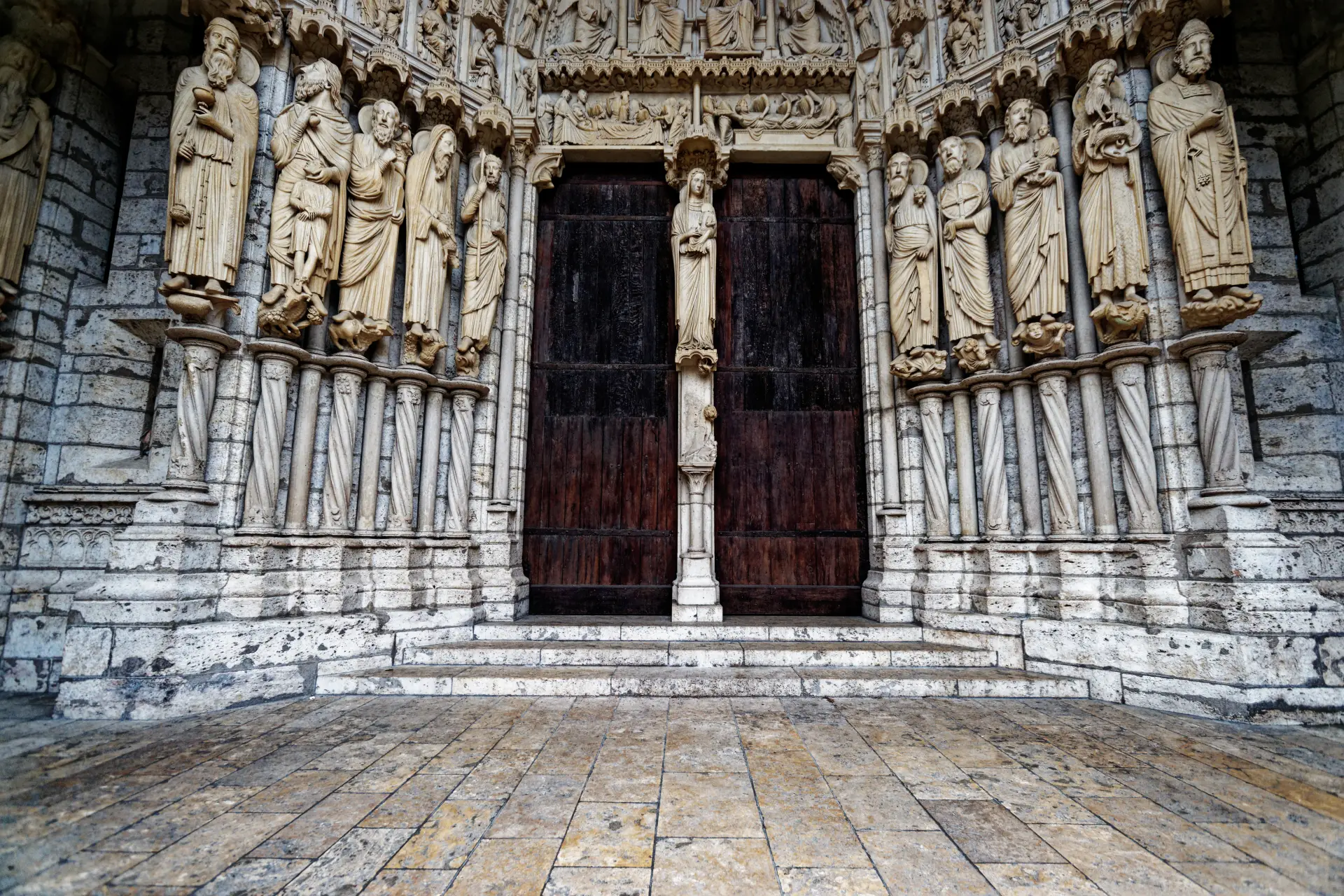
Be sure to pay attention to the countless sculptures adorning the cathedral's facades and interiors. Every figure, every gargoyle – it's not just a detail; it's part of a grand narrative. Here lies the secret of medieval thought, their perceptions of the world, good, and evil. We will learn to read these stone stories, to understand their language, which seemed so obvious to people of that era, but now requires our attention and deciphering.
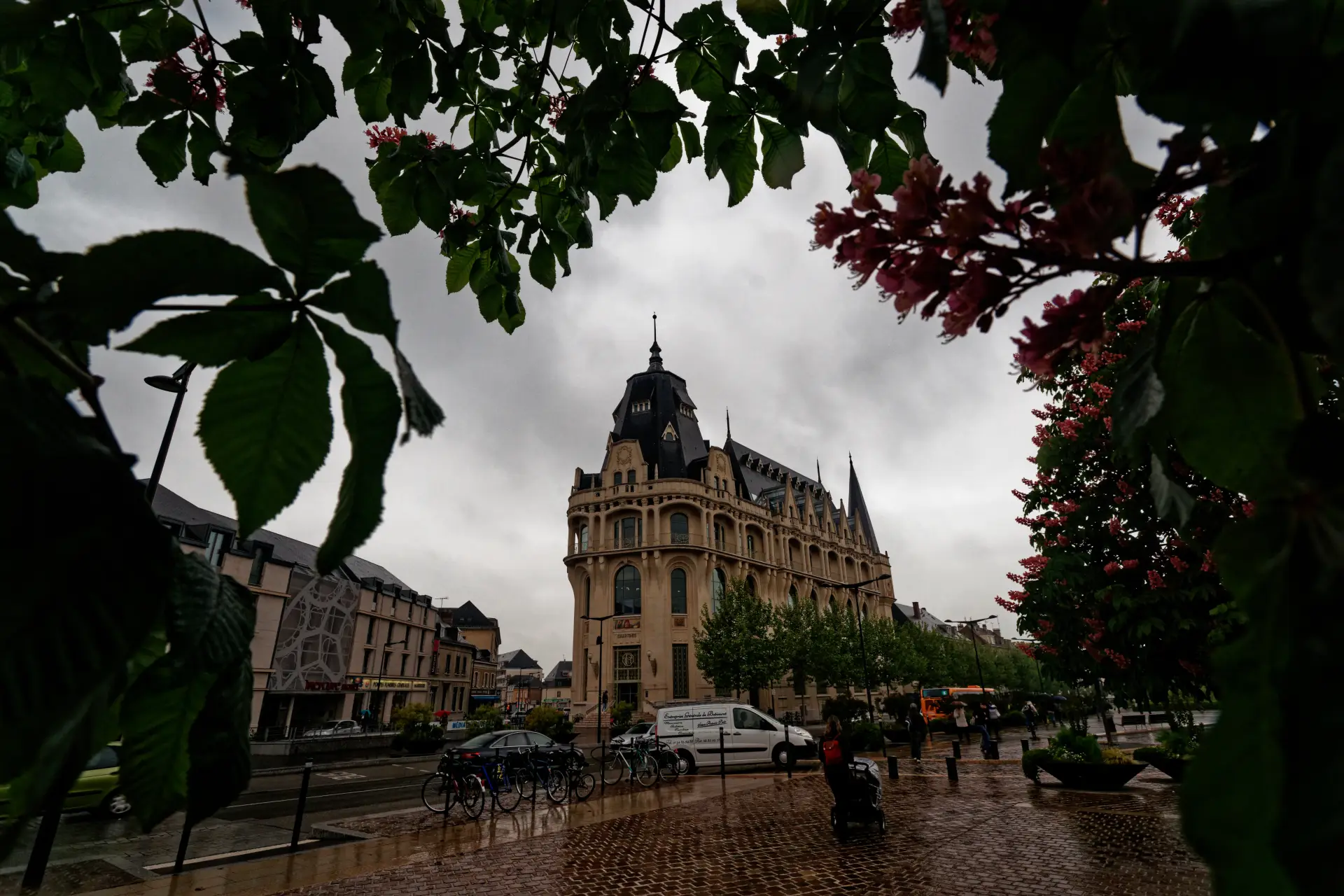
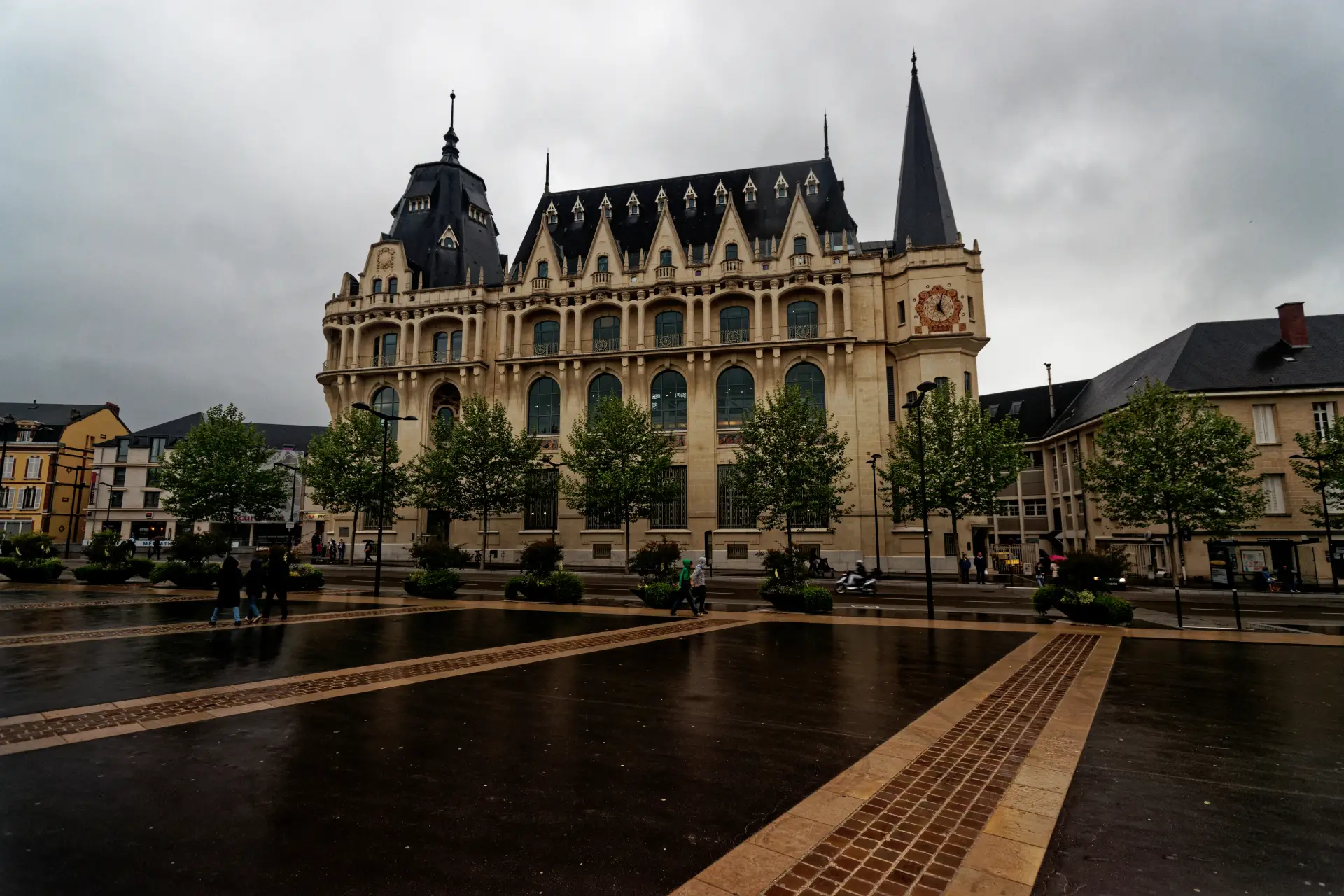
But Chartres is not just the cathedral. After we unravel its main mysteries, we will stroll through the cozy medieval streets, admire the old half-timbered houses, and peek into secluded courtyards. Local history claims that the spirit of long-gone artisans and merchants still lingers here. You will see how the city lived around its majestic temple and feel its unique provincial charm.
This tour is not just a sightseeing trip. It's an immersion into an atmosphere where history comes alive, and legends become almost tangible. After this place, you will look differently at Gothic architecture, at the role of light in art, and at the very essence of faith embodied in stone. Join us, and let Chartres reveal its most intimate secrets to you!
As Chartres Cathedral emerges on the horizon, a profound sense of time washes over you, its powerful silhouette cutting through the air, separating modern bustle from the serene grandeur of ages. This isn't merely a glimpse of a monument; it's an immersion in history, where every curve of the Gothic spires whispers ancient legends. Local lore has it that precisely from this distance, the cathedral's true spirit unfolds, preparing you for the secrets held within its very stone heart.
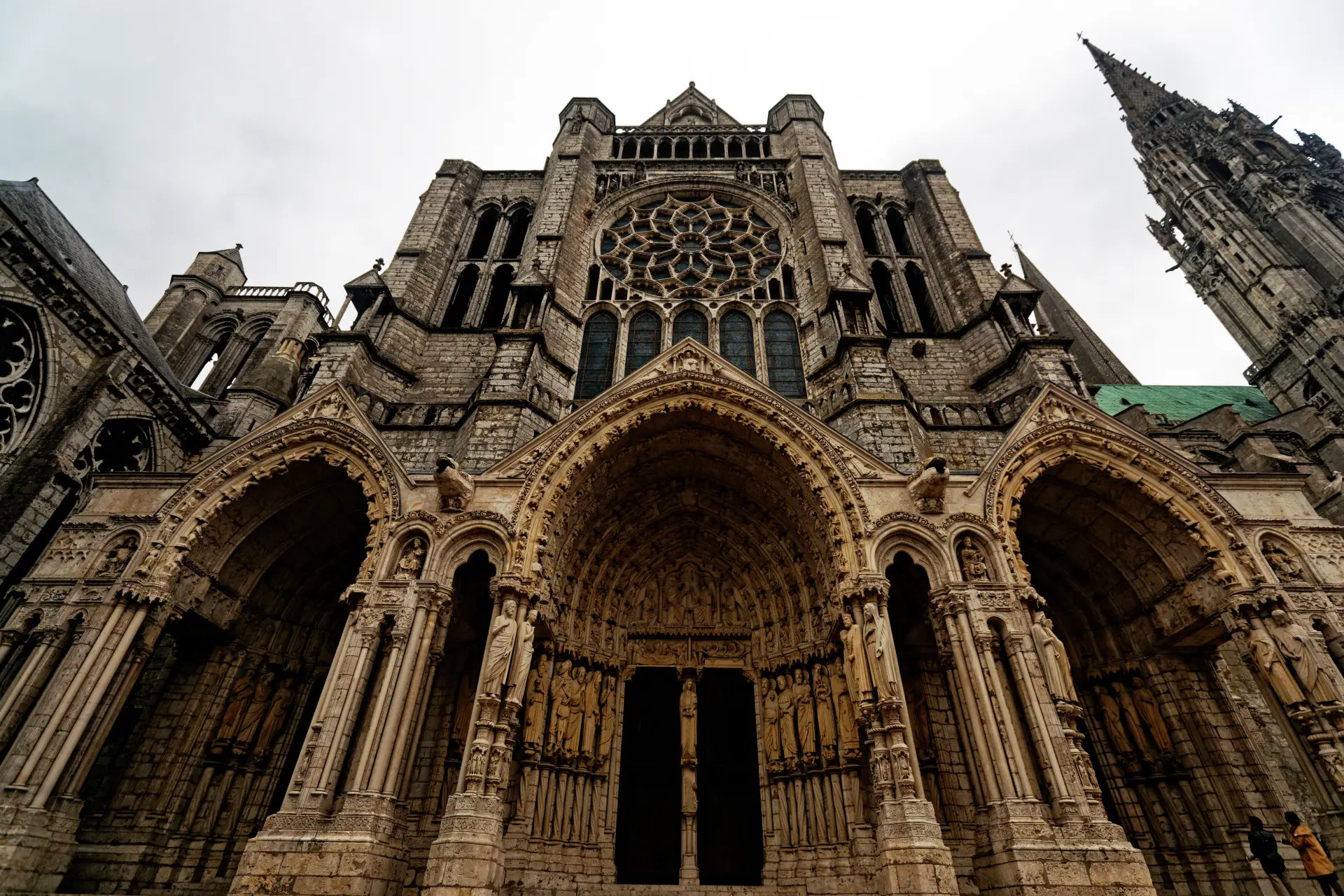
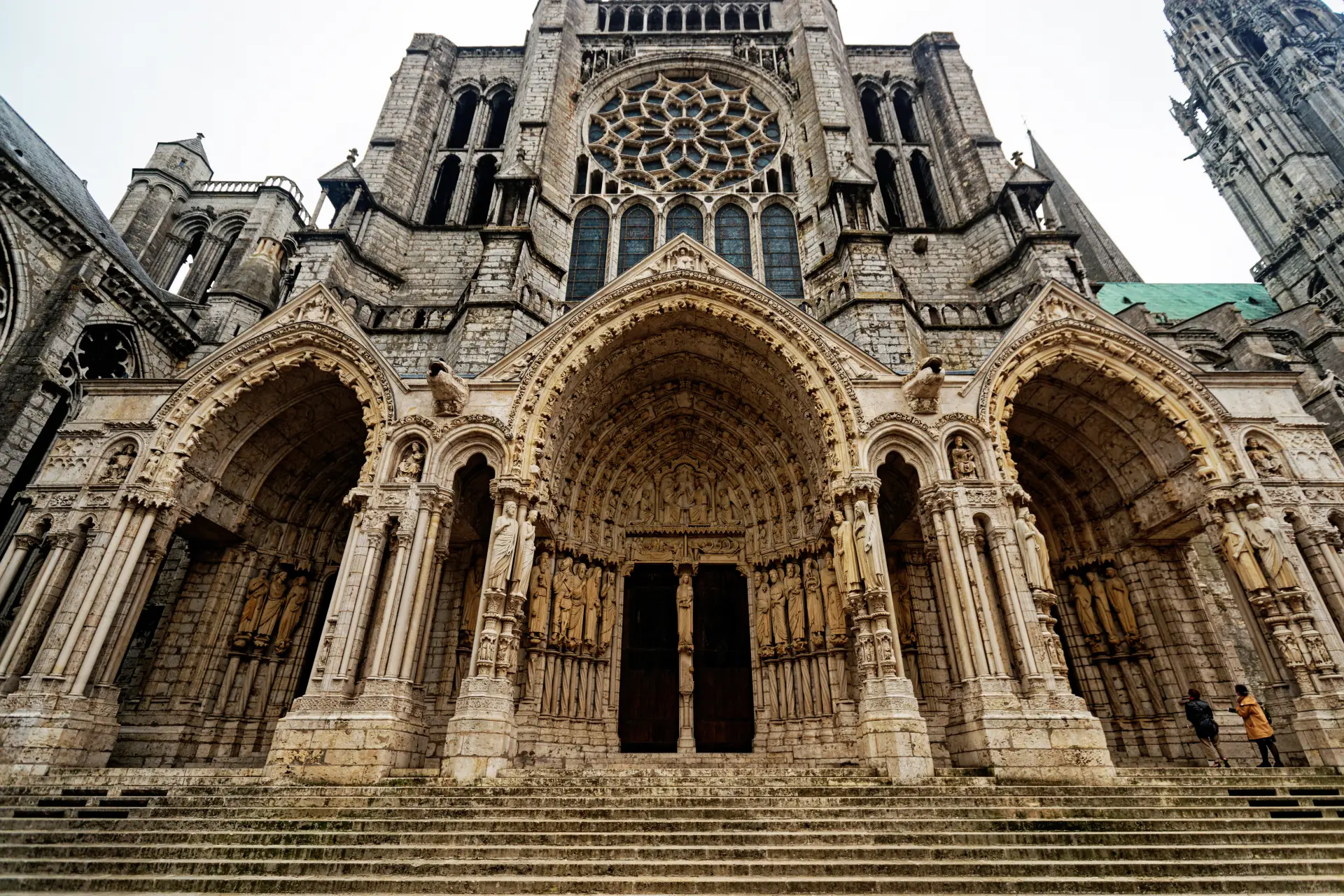
Emerging from Chartres' narrow lanes, you step onto a broad square where time itself seems to pause. Here, before the cathedral's grand façade, you feel the sheer force of medieval thought carved into every stone. Local lore has it that ancient wells, whose waters possess a special power, lie hidden beneath these very flagstones. We'll uncover why the central portal is adorned with such unusual figures, and what their true meaning is for those who know how to read its ancient messages.
Now that we stand face to face with Chartres Cathedral, it's time to decipher its stone book. The facades and portals are grandiose narratives carved in stone. Few people notice how differently the three main portals appear – each like a window into a separate era. We'll begin with the West, or Royal Portal – a masterpiece of Romanesque sculpture, miraculously survived the fire of 1194. You'll discover why the figures here are so austere, almost otherworldly.
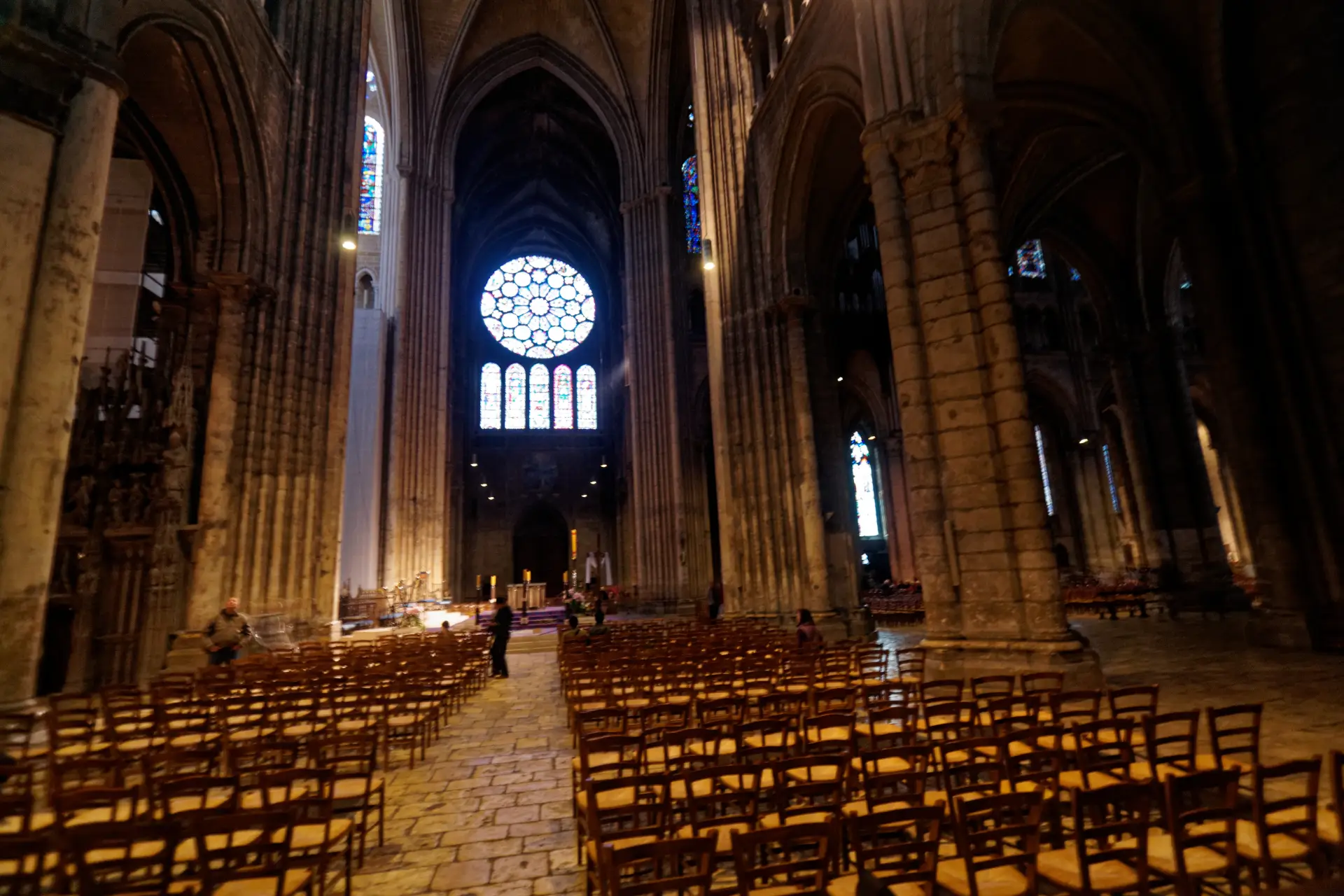
Imagine stepping across the threshold of something grand, where time seems to stand still. The interior of Chartres Cathedral, its nave and choir – an entire world carved from stone. Few people immediately grasp the true scale of this marvel until they let their gaze rise to the dizzying vaults. Local history claims the cathedral rose from the ashes after the devastating fire of 1194. Ask yourself, why did medieval masters so desperately fight gravity, raising walls higher and higher? The answer lies in deep faith.
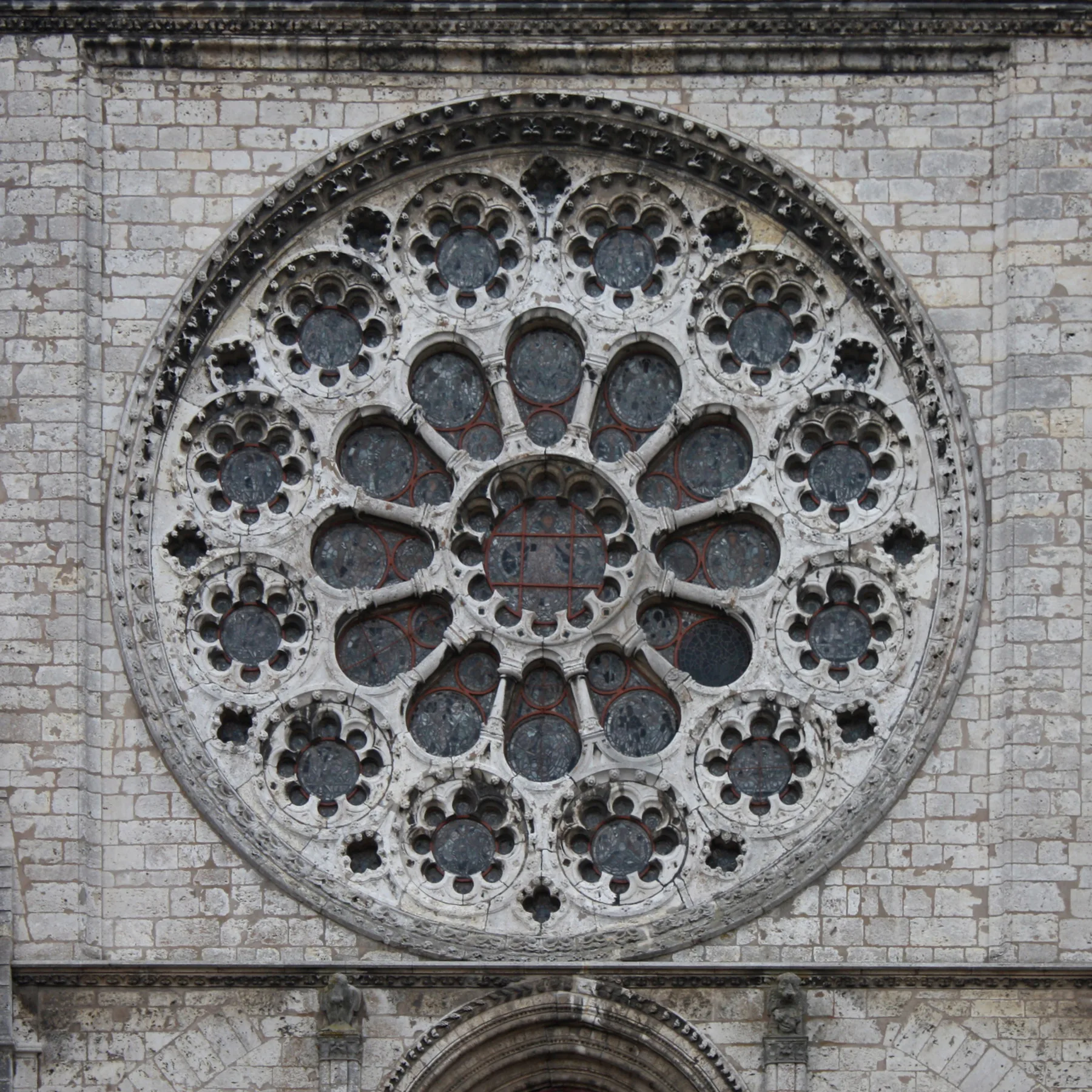
When the sun's rays penetrate through the thousand-year-old glass of Chartres Cathedral, they transform its interior into a kaleidoscope of ethereal hues. Forget conventional notions of color – here, something entirely different awaits you. The famous stained glass windows of Chartres are radiant canvases that for centuries served as a 'Bible for the illiterate,' telling sacred stories in light and color.
Across Chartres Cathedral's floor sprawls a colossal stone pattern—the Labyrinth. Medieval pilgrims once embarked on a symbolic journey to Jerusalem here, never leaving France. More than mere decoration, this nearly ten-meter diameter marvel, crafted from contrasting dark and light stones, was a path to enlightenment. Local lore whispers of a brass disk depicting the Minotaur at its center. Its true purpose remains one of many mysteries we’ll uncover.
Down, beneath Chartres' majestic arches, a labyrinth leads where every stone whispers a thousand years of history. The crypt, France's most extensive, is not merely the cathedral's foundation, but a true subterranean world. Here, local lore has it, lie the roots of a pagan cult and early Christian relics. We'll descend into this mysterious silence, feeling centuries breathe, to touch the unsolved secrets waiting deep below.
Once, within these very walls of the Bishop's Palace, the destinies of Chartres and its region were shaped. Today, this elegant 16th-century mansion, adjacent to the cathedral, houses the Museum of Fine Arts. Its collections tell local history through painting, sculpture, and everyday objects. We'll see not only masterpieces by renowned artists but also learn how Chartres' bishops lived, and what secrets these grand halls held. Local lore has it that some rooms still recall whispers of intrigue and fervent prayers.
The very stones beneath your feet in old Chartres' narrow, cobbled lanes hum with forgotten tales. Here, time slows, allowing you to trace the phantom steps of knights and merchants. We’ll wander past half-timbered houses where local lore has it medieval artisans once plied their trade, and pause to ponder why certain doors seem to lead nowhere at all. This isn't just a stroll; it's an immersion into a living past, each twist revealing a tiny secret your guide is eager to share.
While Chartres’ magnificent Notre-Dame draws all eyes, a quieter, equally ancient beauty awaits: the elegant Saint-Pierre Church. Its history stretches back to the early Middle Ages, boasting astounding 13th-century stained glass – some of Chartres’ oldest, whose deep blue rivals the cathedral’s own. Local lore has it that a Benedictine monastery once stood here. Its bell tower, however, conceals not just chimes, but truly unexpected secrets we’ll uncover inside.
Leaving the heights of the cathedral, we'll descend into a completely different Chartres – a secret, vibrant Chartres, breathing with the Eure River. Here, on the embankments, you'll see the city as artisans and ordinary residents knew it for centuries. Few tourists make it here, yet it is precisely here that the secret to understanding how the city lived and prospered is hidden.
Guillaume Gate in medieval Chartres was never merely an entry point; it stood as a symbol of the city's stubborn defiance. These sturdy remnants of fortifications once greeted weary pilgrims and wary merchants, yet fiercely repelled invaders. Knights in clanking mail, even kings, trod these very stones. Local lore whispers that right here, at these gates, in 1421, one of the Hundred Years' War's most brutal clashes unfolded, leaving unseen, palpable scars.